Whether you’re trying to climb ranked ladders, sharpen your tournament strategy, or optimize your controller setup for competitive play, finding reliable, actionable gaming insights can be overwhelming. With constant updates, shifting metas, and evolving eSports dynamics, players need clear guidance that goes beyond surface-level tips.
This article is built to meet that need. We break down core gaming concepts, analyze current competitive trends, and translate pro-level strategies into practical steps you can apply immediately. From event-level tactics to advanced controller configurations, every section is designed to help you compete smarter—not just harder.
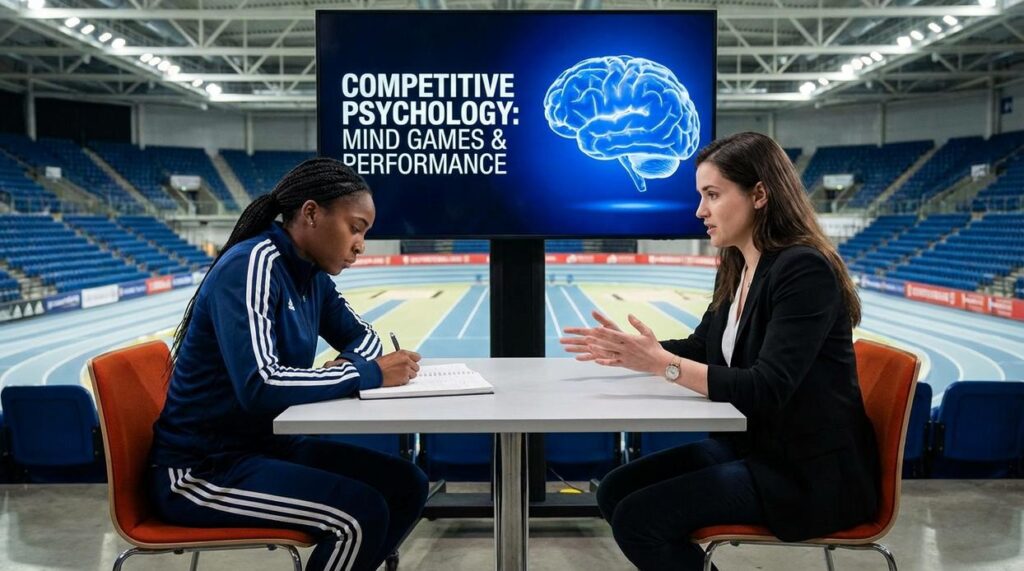
Our insights are grounded in deep analysis of competitive matches, evolving game mechanics, and proven performance principles used at the highest levels of play. We also explore the growing importance of mental coaching in esports, highlighting how focus, resilience, and decision-making under pressure can define match outcomes.
If your goal is measurable improvement and a clearer competitive edge, you’re in the right place.
Deconstructing the Champion’s Mindset: Core Mental Skills
What Is Mental Toughness in Esports?
Mental toughness isn’t just “not tilting.” That definition is incomplete. In competitive play, it means recovering immediately after a lost round, sticking to the game plan under pressure, and maintaining calibrated confidence (not ego). For example, elite Valorant IGLs often lose early duels yet continue making disciplined calls instead of forcing risky plays. That resilience translates directly into more consistent late-game performance. While some argue mechanics alone win matches, tournament data consistently shows teams with stronger psychological stability perform better in reverse-sweep scenarios (APA research on performance resilience supports this link).
Breaking Down Cognitive Performance
At its core, high-level gaming depends on measurable cognitive skills:
| Skill | What It Means | Player Benefit |
|——-|—————|—————|
| Reaction Time | Speed of physical response | Faster trades |
| Decision-Making Speed | Choosing optimal plays quickly | Better rotations |
| Information Processing | Interpreting audio/visual cues | Smarter positioning |
| Attentional Control | Sustained focus over time | Fewer late-game errors |
Although critics claim “game sense can’t be trained,” structured mental coaching in esports improves these metrics through drills and scenario reviews.
The Mind-Body Connection
Finally, sleep and nutrition directly affect cognitive latency and focus (CDC confirms sleep loss impairs reaction speed). In other words, eight hours of sleep may improve aim more than another ranked grind session (yes, really). Pro tip: prioritize hydration before scrims to maintain attentional control.
Actionable Psychological Drills for Elite Gamers
I still remember the first tournament where my hands shook so badly I missed an easy combo I’d landed a hundred times in practice. That loss hurt—but it forced me to take the mental side seriously.
Visualization and Mental Rehearsal
Visualization (mentally simulating an action before performing it) isn’t just motivational fluff. Sports psychology research shows that mental rehearsal activates similar neural pathways as physical practice (Guillot & Collet, 2008). Before matches, I now close my eyes for five minutes and walk through:
- A clutch 1v2 retake
- Clean map rotations
- Perfect ability combos under pressure
I imagine the crosshair placement, the sound cues, even the crowd noise. When the moment comes, it feels familiar—like I’ve already been there. (Because, mentally, I have.)
Pro tip: Visualize mistakes too—and recovering from them calmly.
Mindfulness and Breathwork for Tilt Control
Tilt (emotional frustration that harms performance) destroys more games than bad aim. Between rounds, I use the 4-7-8 method:
- Inhale for 4 seconds
- Hold for 7
- Exhale for 8
This activates the parasympathetic nervous system, lowering stress (Harvard Health Publishing, 2020). After a bad death, one cycle resets me. It’s subtle—but so is the difference between snapping and stabilizing.
Positive Self-Talk and Affirmations
Your inner monologue matters. Compare:
- “My aim is off.”
- “Reset. Focus on the next shot.”
The first labels you. The second directs you. I used to spiral after one mistake. Now I treat each round like a new spawn. (Respawns exist for a reason.)
This shift is central to mental coaching in esports because language shapes confidence under pressure.
Goal Setting for Performance—Not Just Outcomes
“I want to win” is an outcome goal. You can’t fully control it.
“I will communicate every rotation” is a performance goal. You can.
Research shows performance goals improve consistency and motivation (Locke & Latham, 2002). In my scrim blocks—similar to what’s discussed in how scrims and practice lobbies shape tournament results—I track controllables: accuracy %, callout timing, utility efficiency.
Winning follows execution. Not the other way around.
Sharpening the Blade: Cognitive Enhancement Techniques
Mechanical skill gets the highlight reel. Cognitive speed wins the tournament.
Improving Information Processing Speed
Think of information processing speed as how fast your brain turns RAW DATA into usable decisions. Player A stares at crosshair placement all game. Player B tracks the mini-map every five seconds. Same aim, different awareness. Guess who rotates faster?
Try this comparison drill:
- Game A: Focus only on mechanics.
- Game B: Track enemy cooldowns and ultimate economy through VOD review.
Cooldown tracking (mentally logging when abilities are unavailable) increases predictive play. According to cognitive load theory (Sweller, 1988), structured focus reduces wasted mental energy. Translation: track less, understand more. Pro tip: dedicate one full match to mini-map awareness ONLY. It feels uncomfortable—that’s growth.
Boosting Decision-Making Under Pressure
Under stress, most players react. Elite players cycle the OODA Loop—Observe, Orient, Decide, Act. It’s a rapid decision framework developed by military strategist John Boyd. Player A panics in a 1v3. Player B OBSERVES positioning, ORIENTS around win conditions, DECIDES on isolation, then ACTS instantly. Same fight, different outcome.
Some argue instinct beats structure. Fair. But instinct is just trained pattern recognition. The OODA Loop accelerates that training. (Even Marvel’s Doctor Strange scans outcomes before acting.) This is where mental coaching in esports becomes practical, not fluffy.
Building Sustained Focus
Tournament days test endurance. Grinding six unfocused hours vs three structured blocks isn’t equal.
- Pomodoro blocks (25-minute focus sprints).
- Distraction-free setup: phone off, notifications muted.
Short bursts outperform marathon autopilot sessions. FOCUS beats time invested. ALWAYS.
Level Up Your Competitive Edge
You came here to sharpen your competitive edge—and now you have the strategies, tactical insights, and performance principles to do exactly that. From smarter controller setups to event-level decision-making, you’ve seen how small adjustments can create major in-game advantages.
The real difference-maker isn’t just mechanics. It’s consistency under pressure. Tilt, hesitation, and burnout are the pain points holding most players back. Mastering mental coaching in esports alongside technical skills is what separates average competitors from elite performers.
Now it’s time to act.
Apply one tactical adjustment from this guide in your next session. Refine your setup. Track your decision-making. Train your mindset with intention. Improvement doesn’t happen by accident—it’s built through deliberate reps.
If you’re serious about climbing ranks, winning tournaments, or dominating your local scene, keep learning from a platform trusted by competitive players who want real results—not recycled tips.
Your opponents are already practicing.
Take what you’ve learned, implement it today, and start playing to win.