If you’re searching for a clear edge in competitive gaming, you’re in the right place. This article breaks down the latest game buzz, core mechanics that actually decide matches, evolving eSports strategies, and the event-level tactics players use to stay ahead of the meta. Instead of repeating surface-level tips, we focus on how competitive formats shape decision-making, how pro controller setups influence reaction time and precision, and how small strategic adjustments can swing high-stakes matches in your favor.
We’ve analyzed tournament play, reviewed patch impacts, and studied strategies used by top-ranked competitors to ensure every insight here reflects what’s working right now—not outdated theory. Whether you’re refining your fundamentals or preparing for serious bracket play, you’ll find practical guidance designed to sharpen your gameplay, strengthen your tactical awareness, and help you compete with confidence.
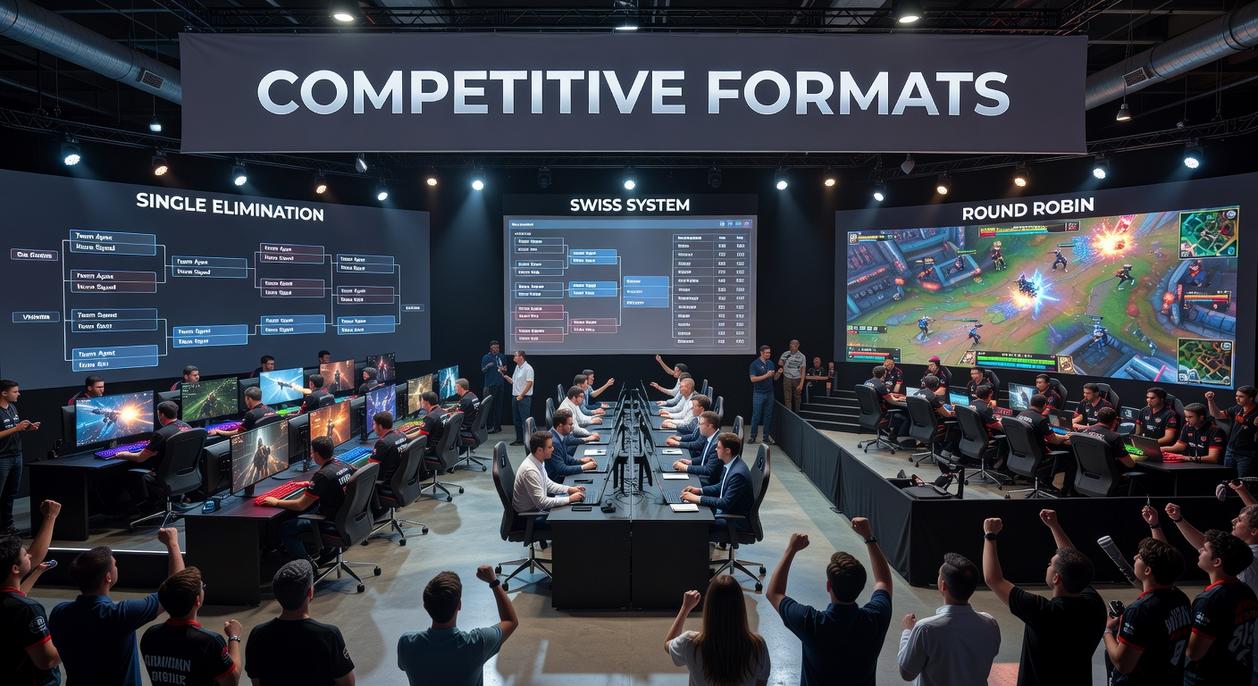
Choosing the right gauntlet means understanding how structure shapes competition. Single elimination is fast and budget friendly, yet one bad match can erase months of practice. Double elimination adds a lower bracket safety net, increasing match volume but requiring tighter scheduling. Round robin guarantees everyone plays everyone, which improves ranking accuracy, though it demands significant time and venue resources. Meanwhile, Swiss systems scale efficiently for large brackets by pairing similar records each round. These tournament game modes directly affect fairness, broadcast length, and player morale. Pick the format that matches your goals, not just your hype. Plan for scale early.
The Classic Knockout: Understanding Single Elimination
In a single-elimination bracket, one loss and you are out. It is brutally simple: winners advance, losers pack up their controllers. I used to love the drama—until I was the top seed knocked out in round one by a wildcard having the game of their life.
It felt unfair. But that loss taught me more than my easy wins ever did.
Single elimination is the fastest of all tournament game modes, which makes it perfect for packed schedules and massive open brackets. Spectators grasp it instantly (no flowcharts required), and every match feels like a finale.
But here is the hard truth: it is a terrible lie detector for skill. One bad read, one unlucky spawn, and a favorite is gone.
High stakes create focus—but also panic.
I learned to prepare differently:
- Warmups matter more than scrims.
- Study early-round opponents like they are finalists.
Because in this format, there is no safety net, no second chance to prove consistency. You either adapt immediately or you go home early, replaying mistakes in your head like a broken highlight reel. That pressure is the point—and the lesson. It rewards preparation, punishes complacency, and never apologizes. Enter ready, or do not enter. Seriously.
Forging Champions: The Power of Double Elimination
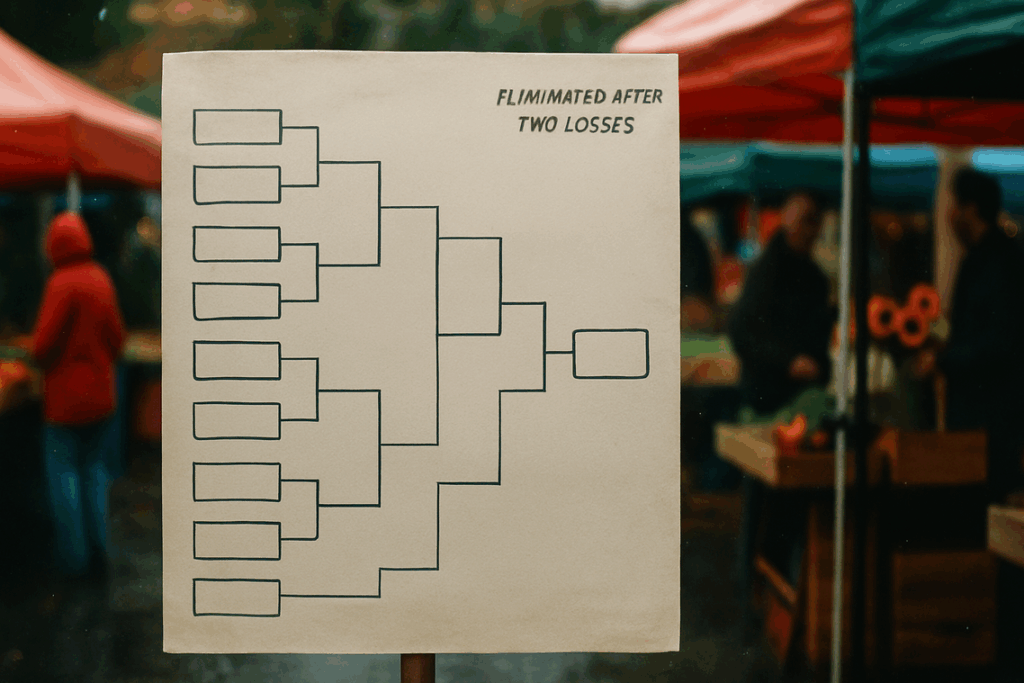
If you ask me, Double Elimination is where real champions are forged. Not in a clean, one-and-done sweep—but in the grind.
Here’s how it works. Players begin in an Upper Bracket. Lose once, and you’re not out—you drop into the Lower Bracket for a second chance. Lose again, and that’s it. The final showdown features the Upper Bracket winner versus the Lower Bracket survivor. Simple in theory. Brutal in practice.
Now, some critics argue it drags on too long. They’re not wrong. Compared to single elimination, it requires nearly double the matches (and yes, that can test everyone’s stamina). Others say the bracket is confusing for newcomers. Fair point—at first glance, it can look like a subway map designed by chaos.
But here’s my take: that complexity is the price of fairness.
In competitive tournament game modes, balance matters. Double Elimination allows for:
- Redemption arcs – One early mistake doesn’t erase weeks of preparation.
- Stronger finals – The best players statistically rise to the top (as shown in competitive format analyses by esports organizers like ESL).
- Unforgettable runs – The legendary “loser’s bracket run” is basically esports’ Rocky story.
And honestly? Those comeback stories are electric. When a player claws back from the Lower Bracket and resets the finals, it feels earned.
Is it longer? Yes. Is it worth it? Absolutely.
If the goal is to crown the best overall competitor—not just the hottest streak—Double Elimination is the gold standard (and I’ll die on that hill).
The Ultimate Skill Test: Round Robin and Group Stage Formats
When competitive integrity is the priority, Round Robin and Group Stage formats are often seen as the gold standard. Here’s how they work. In a pure Round Robin, every competitor faces every other competitor once. Simple in theory, brutal in execution. A Group Stage, meanwhile, splits participants into smaller pools that run their own mini Round Robins, with top performers advancing to a playoff bracket.
The biggest advantage? Data. Lots of it. Because everyone plays multiple matches, standings reflect consistent performance rather than one lucky (or unlucky) moment. This format reduces the impact of bad matchups and gives teams time to adapt. In tournament game modes where strategy evolves mid-event, that flexibility matters.
However, critics argue it’s inefficient. And they’re not wrong. With large brackets, scheduling becomes a marathon. You may also get “lame duck” matches—games that no longer affect standings. Viewership can dip when stakes disappear (no one loves a filler episode).
Still, consider the benefits:
- More accurate skill ranking
- Increased player exposure
- Better statistical analysis for seeding
- Stronger competitive narratives
Professional leagues like the LCS and OWL rely on this structure because it rewards consistency over chaos.
Looking ahead (and this is speculation), hybrid formats may dominate future championships—shortened Group Stages feeding into faster elimination brackets to balance fairness and viewer attention spans.
Pro tip: Extended formats reward preparation depth, so optimizing gear and strategy matters. Teams serious about advancement often focus on optimizing loadouts for competitive event settings long before playoffs begin.
In short, if you want the truest test of skill, this format delivers—just bring patience.
Advanced Tactics: Crafting Hybrid Tournament Structures
Back in 2019, several major esports circuits shifted after months of viewer feedback and competitive analysis. The result? A hybrid anchored by a Round Robin Group Stage feeding into a Double Elimination playoff bracket—now considered the gold standard.
Why it works:
- Early-stage consistency filters out flukes.
- Late-stage brackets create high-stakes redemption arcs (the kind that fuel highlight reels for years).
Critics argue hybrids drag on and exhaust players. Fair point—longer formats can stretch schedules by weeks. But when time allows, this structure ensures the most battle-tested roster lifts the trophy, not just the hottest streak.
Finalizing your format is more than logistics; it shapes competitive integrity and pacing. Choosing Single Elimination
Double Elimination, and Round Robin sets the emotional arc of your event. However, some argue speed should always win because audiences have short attention spans. Yet fairness builds long term trust. In the future, I suspect hybrid brackets will rise, blending Swiss style stages with finals for drama (think esports meets March Madness). Consequently, organizers must weigh time limits against legitimacy, while players map their path strategically. Analyze your goals carefully, then commit to the structure that delivers speed, accuracy, or spectacle. Choose wisely.
Lock In Your Competitive Edge
You came here to sharpen your understanding of competitive play, event-level tactics, and smarter setup decisions. Now you have a clearer roadmap for navigating game buzz, refining your strategy, and optimizing your controller configuration for real results.
Falling behind in today’s fast-moving competitive scene isn’t just frustrating — it costs you rankings, team synergy, and tournament momentum. Mastering core mechanics and adapting to evolving metas is what separates casual participants from serious contenders.
The next move is yours. Start applying these strategies in your scrims, fine-tune your controller setup for precision, and review your gameplay with a tactical mindset. If you’re ready to level up faster, dive deeper into advanced guides, event breakdowns, and pro-level setup insights trusted by competitive players who refuse to settle for average.
Don’t just play — compete with purpose. Your next win starts with what you do right now.