
If you’re searching for a clear breakdown of the esports event production process, you’re likely looking to understand what truly goes into running a successful competitive gaming event—beyond the lights, stage, and livestream. Whether you’re an aspiring tournament organizer, a competitive player curious about event logistics, or a brand exploring sponsorship opportunities, this guide is built to give you a practical, behind-the-scenes view.
In this article, we walk through the full esports event production process—from initial concept development and game selection to broadcast setup, competitive integrity measures, player coordination, and live event execution. You’ll learn how event-level tactics, technical configurations, and production workflows come together to create a seamless competitive experience for both players and viewers.
Our insights are grounded in deep analysis of major tournaments, proven competitive frameworks, and real-world event structures used across today’s leading esports circuits—so you’re getting informed, experience-backed guidance you can trust.
Phase 1: The Strategic Foundation (6–3 Months Out)
This is where most tournaments quietly succeed—or fail. Six months out, you’re not “planning an event.” You’re building a SYSTEM.
Game Selection & Format
Game selection isn’t just about popularity; it’s about alignment. A fighting game with a tight local scene behaves very differently from a global FPS with online qualifiers. Some organizers argue you should just pick the hottest title on Twitch. That sounds logical. More viewers, more hype.
But trending doesn’t always mean sustainable. A niche title with a loyal community can outperform a massive title with fragmented interest (think grassroots Smash locals vs. under-promoted AAA events).
Choose a format that fits your constraints:
| Format | Best For | Watchability | Time Control |
|———————|—————————|————–|————–|
| Single-Elimination | Tight schedules | High drama | Predictable |
| Double-Elimination | Competitive integrity | Balanced | Moderate |
| Round-Robin | Small elite groups | Analytical | Lengthy |
Competitive integrity (fairness in determining the strongest player) should match your audience expectations.
Budgeting & Financials
Line-item everything. Venue, prize pool, hardware, network infrastructure, staffing, marketing. Then add a 15% contingency fund. ALWAYS.
Some believe contingency funds are overly cautious. They’re not. Power surges, last-minute equipment rentals, emergency staff replacements—these aren’t rare. They’re normal (welcome to live events).
Pro tip: Lock in hardware partners early to offset upfront capital strain.
Venue Scouting & Selection
Internet bandwidth isn’t a suggestion—it’s survival. Confirm guaranteed upload/download speeds in writing. Test power circuits. Map player flow. Allocate space for spectators and a production/admin zone.
This is part of the esports event production process that competitors rarely detail: load-in logistics, cable routing, and broadcast isolation zones.
Sponsorship & Initial Marketing
Build a sponsorship deck focused on ROI—impressions, on-stream branding, attendee demographics. Launch a landing page early to capture emails.
Hype isn’t noise. It’s momentum. And momentum compounds.
Phase 2: Technical & Logistical Assembly (3–1 Months Out)
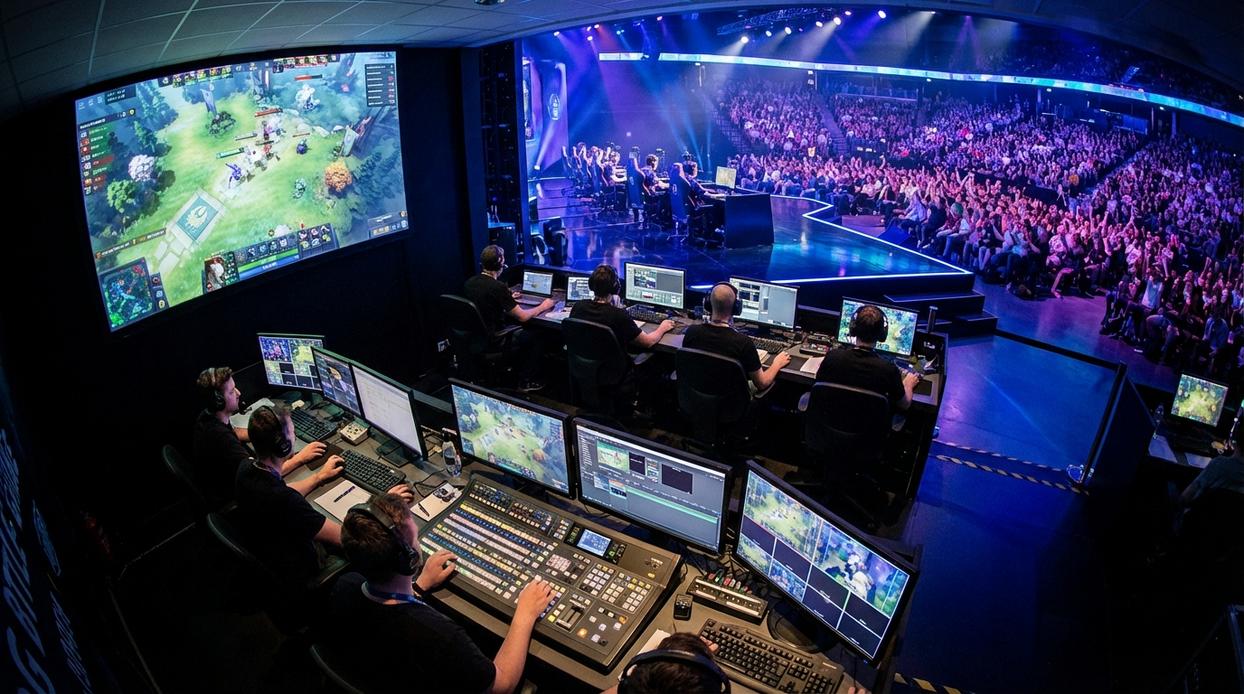
This is where planning turns into physical infrastructure. The difference between a smooth tournament and a meme-worthy disaster (we’ve all seen those clips) usually comes down to details handled here.
Hardware & Network Infrastructure
Every PC, monitor, and peripheral must be sourced, imaged, and stress-tested under tournament conditions. That means identical graphics settings, locked frame rates, and firmware updates completed well before match day. A dedicated LAN (Local Area Network—an on-site wired network) should be isolated strictly for gameplay. Public or guest Wi-Fi must remain separate to prevent bandwidth throttling, packet loss (data failing to reach its destination), or latency spikes. According to Riot Games’ competitive operations standards, stable low-latency environments are critical for competitive integrity (Riot Developer Portal).
The benefit? Competitive fairness and zero “lag excuse” debates.
Broadcast Production Setup
Define the viewer experience early. Casters need XLR microphones for clean audio, HD cameras with proper lighting, and soundproofed commentary space. Observer PCs—machines dedicated solely to in-game spectating—ensure cinematic angles without affecting player systems. Custom overlays and real-time scoreboards reinforce branding and clarity. This step anchors the esports event production process and transforms raw gameplay into a professional broadcast product.
Staffing & Role Definition
Assign clearly documented responsibilities for:
- Tournament Admins – Rule enforcement and dispute resolution
- Production Crew – Stream switching, audio mixing, camera operation
- Event Staff – Check-in logistics and venue flow management
Clear documentation prevents confusion mid-event (because chaos spreads fast).
Player Management & Rulebook
Publish a comprehensive rulebook covering competitive scenarios, penalties, and conduct standards. Establish Discord as the primary communication channel for instant updates and rulings.
When these systems align, execution becomes predictable—and predictability is power.
Phase 3: Game Day Execution (The Live Event)
Game day is where planning turns into performance. First, you need a Run of Show—a detailed, minute-by-minute timeline covering staff call time, player check-in, warmups, match blocks, breaks, and the awards ceremony. Think of it as the event’s master script (without it, chaos freelances). Distribute it to every staff member so everyone works from the same clock.
Next comes on-site operations, which simply means managing the live flow. Matches must start on schedule, admins must resolve disputes quickly, and the broadcast team needs constant updates. A “match admin” (the official who enforces rules) should follow clear escalation steps. In other words, no shouting across the stage—use structured communication.
However, even perfect schedules face problems. That’s why live troubleshooting plans are non-negotiable. Define protocols for power outages, network failures, or hardware malfunctions. Backup PCs, spare peripherals, and redundant internet lines aren’t luxuries—they’re safeguards. Pro tip: test backups under load before doors open.
Finally, prioritize audience and player experience. Clear caster audio, organized seating, and smooth stage transitions keep energy high. A well-executed esports event production process ensures competitive integrity while creating hype. For deeper strategic insight, read what patch notes dont tell you reading between the lines.
Phase 4: Post-Event Wrap-Up & Analysis
The arena lights dim, but the work doesn’t. “Did payouts clear?” the tournament lead asks. Finance replies, “Every winner’s wired—double-checked against brackets.” That’s payouts and financial reconciliation in action: verifying prize pools and matching actual spend to budget (because surprises belong in loot boxes, not ledgers).
Next comes content repurposing. “Clip that reverse sweep,” a producer says. VODs, highlight reels, and photo drops keep momentum alive long after finals.
Finally, data analysis. “Chat peaked at 42,000,” someone notes. Review metrics, gather feedback, refine the esports event production process, and plan smarter for next season.
Level Up Your Competitive Edge
You came here to understand how game buzz, core mechanics, eSports strategies, and event-level tactics all connect — and now you have the bigger picture. From refining your pro controller setup to mastering team coordination and understanding the esports event production process, you’ve seen how every layer of competitive gaming fits together.
The reality is this: most players and aspiring organizers struggle not because they lack passion, but because they lack structured insight. They grind without a strategy. They compete without optimizing. They host without fully understanding the moving parts behind high-level execution.
Now you know better.
The next step is simple: apply what you’ve learned. Fine-tune your setup. Break down pro-level plays. Study event flow like a strategist, not just a spectator. And if you’re serious about staying ahead, dive deeper into advanced guides, tactical breakdowns, and competitive insights designed to sharpen your edge.
Don’t stay average when elite performance is built on preparation. Get the strategies, tools, and breakdowns trusted by competitive players who want real results — and start leveling up today.