

When matches are decided by milliseconds, your controller choice isn’t just preference—it’s performance. This guide directly compares the performance of wired and wireless controllers, settling the debate once and for all. At the heart of wired vs wireless controller performance is one critical question: which option delivers the lowest latency and most reliable connection for your style of play? Whether you’re grinding ranked matches or stepping into eSports competition, uncertainty about input lag and signal stability can cost you wins. We break down the technical data—input response times, signal integrity, and real-world reliability—so you can confidently choose the right competitive edge.
The Ultimate Test: Input Lag and Latency Explained
Defining Input Lag
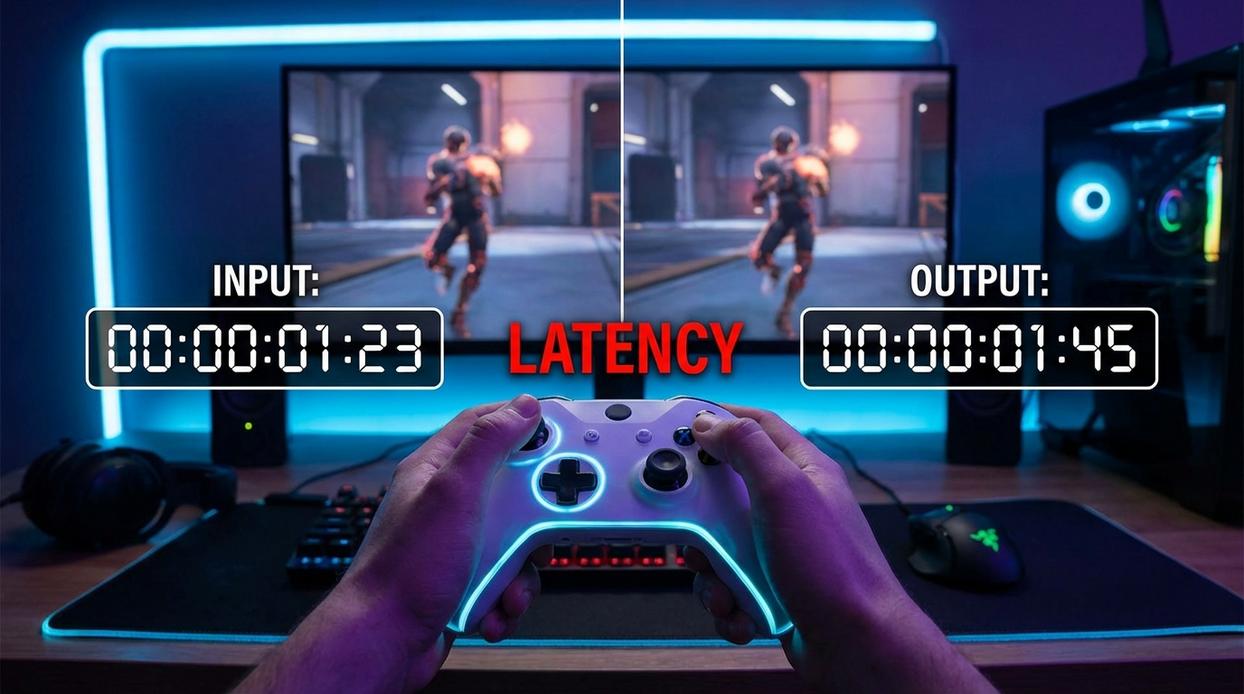
Input lag is the split-second delay between pressing a button and seeing the action happen on-screen. Think of it like shouting into a canyon and waiting for the echo. In competitive gaming, that “echo” can decide a match. When milliseconds matter, input lag becomes the INVISIBLE ENEMY. A 20ms delay might not sound like much, but at 60 frames per second, that’s more than a full frame of hesitation (and yes, pros can feel that).
Wired Controllers (The Benchmark)
A wired controller is like taking a highway with no traffic lights—direct, predictable, efficient. USB connections provide the theoretical lowest latency because the signal travels straight to the console or PC. Polling rate—how often the controller reports inputs—also matters. At 1000Hz, the controller checks in 1000 times per second; at 500Hz, half that. Higher polling means tighter responsiveness. A high-quality cable keeps the signal STABLE, avoiding interference hiccups (cheap cables are the potholes of this highway).
Modern Wireless (Closing the Gap)
Wireless used to feel like mailing a letter instead of sending a text. Not anymore. Proprietary 2.4GHz dongles act like private express lanes, delivering low-latency signals that often rival wired in real-world tests. Bluetooth, while convenient, is more like public transit—reliable but making extra stops, which adds delay.
The Verdict on Latency
In wired vs wireless controller performance, wired still holds a measurable edge. But modern 2.4GHz controllers are so close that only the top 0.1% of pros will truly notice the gap.
Consistency is Key: Reliability and Signal Integrity
When players debate wired vs wireless controller performance, the real issue isn’t speed alone. It’s consistency.
Let’s clarify what that means.
Signal integrity refers to how clean and stable your controller’s input signal is from button press to on-screen action. The fewer disruptions, the more predictable your gameplay feels (and predictability wins tournaments).
Wired Reliability (The Constant)
A wired connection sends data directly through a cable. No batteries. No radio signals. The only real failure points are physical: frayed cables, bent USB ports, or accidental tugs mid-match. In other words, the risks are visible and manageable.
Some argue modern wireless tech is “just as good.” In ideal conditions, that can be true. But tournaments rarely offer ideal conditions.
Wireless Reliability (The Variables)
Wireless controllers rely on batteries and radio frequencies. Battery drain can reduce performance stability, especially with rumble or adaptive triggers active. Meanwhile, crowded venues create “noisy” environments—multiple devices competing on similar frequencies.
This is where frequency hopping comes in. Many 2.4GHz dongles rapidly switch channels to avoid interference. Standard Bluetooth lacks this aggressive hopping behavior, which can make it less stable for serious competition (particularly in device-dense arenas).
Battery Management as a Skill
Serious wireless players treat power like a resource:
- Charge after every session (not just when low)
- Use play-and-charge kits during warmups
- Disable rumble if margins matter
- Track real battery life under tournament settings
If you’re dialing in performance, reviewing guides like how to reduce input lag for tournament level gaming helps separate myth from measurable improvement.
In short, wireless isn’t unreliable. It’s variable. And competitive play rewards control over variables.
Beyond Performance: Convenience and Ergonomics
When players debate wired vs wireless controller performance, they often forget something bigger: comfort wins long sessions.
The Freedom of Wireless
Going cable-free means no awkward arm angles, no accidental yanks, and no spaghetti mess under your desk (we’ve all been there). Wireless controllers let you lean back, shift positions, or sit farther from a TV without rearranging furniture. That flexibility matters during three-hour ranked grinds. The trade-off? Slightly more weight from the internal battery. Some players love that added heft for stability; others find it fatiguing.
The Simplicity of Wired
Wired controllers are pure plug-and-play. No charging. No pairing. No hunting for a missing dongle five minutes before locals start. If you host frequent couch co-op nights, this is the stress-free option. Reliability is convenience in disguise.
Recommendation: Choose wireless for relaxed, immersive sessions. Choose wired for competitive setups, travel, or grab-and-go multiplayer. Pro tip: test both for a week—your hands will decide faster than any spec sheet.
The Right Tool for the Arena: Matching Controller to Game
Choosing the right controller isn’t just preference—it’s performance insurance. When you match your setup to your playstyle, you gain consistency, confidence, and fewer “why did that happen?” moments.
-
For the eSports Professional: At LAN events, reliability is everything. A wired controller eliminates signal interference and battery anxiety, giving you uninterrupted precision when prize pools (and reputations) are on the line.
-
For the Serious Online Competitor: A premium 2.4GHz wireless model delivers near-wired responsiveness without tethering you to your desk. In the wired vs wireless controller performance debate, this is the sweet spot—competitive speed with practical comfort.
-
For the Casual Couch Co-op Player: Bluetooth freedom means relaxed positioning and easy sharing. A few milliseconds of latency won’t ruin pizza night.
-
For the Streamer: Wireless keeps your setup camera-clean; however, wired ensures zero mid-stream power scares (because chat never forgets).
Ultimately, the right tool removes friction—so you can focus on winning.
Your Final Verdict: Cabled Stability or Wireless Freedom?
You came here to settle the debate on wired vs wireless controller performance, and now the guesswork is gone. You understand the trade-off: rock-solid, tournament-ready reliability versus the clean, unrestricted feel of wireless freedom.
If input consistency under pressure is your pain point, wired remains the gold standard. If mobility and comfort matter most for high-level home play, today’s 2.4GHz wireless delivers performance that’s nearly indistinguishable.
Now it’s your move. Assess your setup, your goals, and your competitive needs—then commit to the controller that sharpens your edge. Don’t let hesitation cost you wins. Upgrade your setup today and play at your highest level.
 Ask Robertow Atkinselianz how they got into pro controller setup guides and you'll probably get a longer answer than you expected. The short version: Robertow started doing it, got genuinely hooked, and at some point realized they had accumulated enough hard-won knowledge that it would be a waste not to share it. So they started writing.
What makes Robertow worth reading is that they skips the obvious stuff. Nobody needs another surface-level take on Pro Controller Setup Guides, Event-Level Game Mod Tactics, eSports Strategy Breakdowns. What readers actually want is the nuance — the part that only becomes clear after you've made a few mistakes and figured out why. That's the territory Robertow operates in. The writing is direct, occasionally blunt, and always built around what's actually true rather than what sounds good in an article. They has little patience for filler, which means they's pieces tend to be denser with real information than the average post on the same subject.
Robertow doesn't write to impress anyone. They writes because they has things to say that they genuinely thinks people should hear. That motivation — basic as it sounds — produces something noticeably different from content written for clicks or word count. Readers pick up on it. The comments on Robertow's work tend to reflect that.
Ask Robertow Atkinselianz how they got into pro controller setup guides and you'll probably get a longer answer than you expected. The short version: Robertow started doing it, got genuinely hooked, and at some point realized they had accumulated enough hard-won knowledge that it would be a waste not to share it. So they started writing.
What makes Robertow worth reading is that they skips the obvious stuff. Nobody needs another surface-level take on Pro Controller Setup Guides, Event-Level Game Mod Tactics, eSports Strategy Breakdowns. What readers actually want is the nuance — the part that only becomes clear after you've made a few mistakes and figured out why. That's the territory Robertow operates in. The writing is direct, occasionally blunt, and always built around what's actually true rather than what sounds good in an article. They has little patience for filler, which means they's pieces tend to be denser with real information than the average post on the same subject.
Robertow doesn't write to impress anyone. They writes because they has things to say that they genuinely thinks people should hear. That motivation — basic as it sounds — produces something noticeably different from content written for clicks or word count. Readers pick up on it. The comments on Robertow's work tend to reflect that.